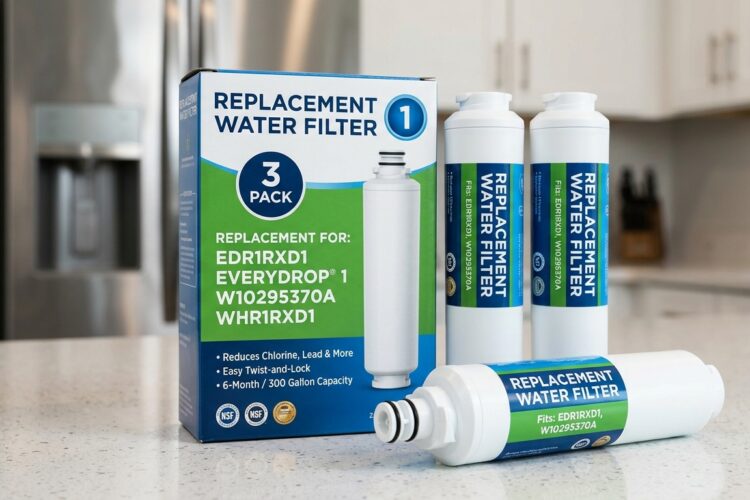
It usually starts with a small nuisance. The dispenser takes a little longer to fill a glass, the ice tastes slightly off, or the filter light on the refrigerator door has been glowing for a few weeks and nobody has done anything about it. Then comes the shopping, and with it a confusing pile of letters and numbers.
This article takes a different angle from a simple product rundown. It treats the filter as part of a maintenance routine, looks at how a three-pack fits into that routine, explains the cross-reference codes in plain language, and lists the questions worth answering before you place an order. It is general education only. It is not a review, and it does not describe hands-on use of any particular product.
Introduction: Maintenance, Not Just a Purchase
Most appliance parts are bought once and forgotten. A refrigerator water filter is different, because it is a consumable. It has a limited working life, it needs to be swapped on a regular basis, and the decision you make about it repeats twice a year for as long as you own the refrigerator.
That is why the packaging format matters as much as the part itself. A single cartridge solves today’s problem. A three-pack, such as the one described in this listing title, is closer to a small supply plan. Under a typical six-month change interval, three cartridges would stretch across about eighteen months of scheduled replacements, assuming the manufacturer’s guidance matches your household’s usage.
The title also lists several codes: W10295370A, EDR1RXD1, WHR1RXD1 and the name Everydrop 1. These all point toward one widely used Whirlpool filter fit. Third-party sellers include them to show which housing their cartridge is designed to match. Understanding that purpose makes the listing far easier to read.
What Is Going On Inside the Cartridge
A Quick Look at Activated Carbon
Cartridges of this kind generally use activated carbon, often molded into a solid block. The material is riddled with microscopic pores, which gives a small piece an enormous amount of surface area. When water moves through the block, some dissolved compounds are drawn to that surface and held there. This is called adsorption, and it is the main reason carbon is associated with improving taste and odor.
Why the Capacity Limit Matters
Carbon does not renew itself. As the surface fills, its ability to hold additional compounds drops. A filter that has passed its useful life may do less than you expect, and a block clogged with sediment can restrict flow. This is the practical reason behind replacement schedules, and it is why leaving a cartridge in place “until it stops working” is not an ideal plan.
What It Is Not Designed For
It helps to keep expectations grounded:
- It does not soften water or prevent scale.
- It does not disinfect water that is unsafe microbiologically.
- It only addresses the substances covered by its own testing, if testing exists.
Where there are real water quality worries, such as a private well or a local advisory, the right resources are your water utility’s annual report and an accredited testing lab, not the fridge cartridge alone.
Reading the Codes Without Getting Lost
Here is a plain-language way to sort the labels in the title.
- Everydrop 1 is the manufacturer’s brand and size name for this filter style.
- EDR1RXD1 is a code tied to the same filter family and often appears on boxes and cartridges.
- WHR1RXD1 is another cross-reference code that parts catalogs commonly group with the others.
- W10295370A is a related part number used for this fit category.
The practical takeaway is that none of these codes, on their own, tell you who manufactured a given cartridge. When a third-party listing says “replacement for,” it is describing intended compatibility. To be sure, check the number in your refrigerator’s manual or on the cartridge currently installed, then compare it with the listing’s compatibility information.
Key Features Worth Understanding
Housing Compatibility
The defining feature is how the cartridge connects. This style uses a push-in and quarter-turn locking action and is shaped to match a specific housing used across a number of Whirlpool-platform refrigerators. A proper fit means no adapters and no tools.
Filtration Media
Expect carbon-based media. Descriptive terms such as “carbon block” or “coconut shell carbon” can add context, though they describe the material rather than prove how well it performs.
Certification Information
Look for independent standards named on the listing or packaging:
- NSF/ANSI 42 relates to taste, odor and particulates.
- NSF/ANSI 53 relates to specific health-related substances, listed on the certificate.
- NSF/ANSI 401 relates to certain incidental compounds.
A certificate belongs to one specific product, so the useful question is whether the exact cartridge you are considering has its own documentation.
Multipack Packaging
A pack of three means fewer reorders but more storage responsibility. Keep unopened cartridges sealed, away from heat, sunlight and strong odors, because carbon can absorb airborne smells.
Simple Installation
The swap typically takes only a few minutes. The old cartridge is turned and released, the new one is seated and turned until it locks, and the system is flushed according to the instructions.
Building a Simple Filter Routine
Since this is a recurring task, a small system helps more than good intentions.
Step One: Pick a Rhythm
Tie replacement to something memorable. Some households choose the days when clocks change, others use a birthday or the start of a season. Whatever the cue, link it to a calendar reminder.
Step Two: Write the Date
Use a marker to note the installation date on the cartridge itself. It takes five seconds and removes guesswork later.
Step Three: Flush Properly
After installing, run several gallons through the dispenser. Trapped air can cause sputtering, and loose carbon fines can cloud the first few glasses. This usually settles quickly.
Step Four: Look for Leaks
Check around the housing after installation and again a day later. A correctly seated cartridge should stay dry.
Step Five: Reset the Indicator
Many refrigerators have a reset sequence for the filter light. The owner’s manual explains it for your model.
Step Six: Store the Spares Sensibly
With a three-pack, keep the remaining cartridges in their original packaging in a cool, dry cupboard rather than near the stove or in a damp utility room.
How It Can Be Used Around the Home
- Drinking water: Chilled dispenser water is the obvious use, particularly for people who notice a disinfectant taste in tap water.
- Ice: Ice picks up odors easily, so cleaner supply water can make a noticeable difference in drinks. Emptying the bin now and then also helps.
- Coffee and tea: Water character influences flavor, so some people prefer filtered water for brewing.
- Cooking: Rice, pasta, soups and stocks all start with water.
- Pets and plants: Many households use dispenser water for pet bowls.
- Reusable bottles: The dispenser can act as a refill station for those cutting back on single-use plastic.
For infant formula, follow pediatric and formula-manufacturer guidance, which may specify particular water preparation steps.
Who It May Suit
- Owners of refrigerators that use this filter style who have verified the fit.
- Households that want to compare original and third-party options.
- People who prefer to stock up and avoid repeated ordering.
- Anyone who wants better-tasting dispenser water without plumbing changes.
It may be less appropriate for those whose refrigerator uses a different cartridge type, or whose water concerns go beyond what a carbon cartridge is meant to address.
Important Things to Consider
- Verify the filter number in your manual, on the model label, or on the old cartridge.
- Read “replacement” carefully. It indicates intended fit, not that the brand made the product.
- Look for traceable certification rather than vague wording.
- Review warranty language in your refrigerator’s paperwork regarding third-party parts.
- Stop if it won’t seat. Forcing a cartridge can cause leaks or damage.
- Know your water. Refrigerator filters are meant for water already considered safe to drink.
- Check return terms, since fit is the main risk.
- Think about disposal. Some manufacturers offer recycling programs.
- Consider your usage. Heavy use or sediment may call for earlier changes.
Comparing General Filtration Categories
- Refrigerator cartridges: convenient, tied to the dispenser and ice maker, limited to compatible models.
- Pitcher filters: portable and install-free, but small capacity and shelf space needed.
- Faucet-mounted units: treat water at the sink, though fit and flow can vary.
- Under-sink systems: larger capacity and sometimes multi-stage, with installation required.
- Whole-house systems: treat every outlet, but involve more complex setup.
- Reverse osmosis: addresses a wide range of dissolved substances, with installation, space and wastewater trade-offs.
Each has a place, and many homes combine two or more.
Frequently Asked Questions
Do these codes all mean the same thing?
They are grouped together in parts catalogs because they refer to the same general fit. Minor variations can exist, so confirm with your own documentation.
Why would someone buy three at once?
It reduces reordering frequency and keeps spares on hand for scheduled changes.
How long can unused cartridges be stored?
Follow the guidance printed on the packaging. In general, keep them sealed, cool and dry.
What if the water looks cloudy at first?
This is commonly air or carbon fines. Flushing several gallons usually clears it.
Is a tool required?
Typically not. The design is meant for hand installation.
What if flow is slow after installing?
Check that the cartridge is fully seated, the supply line isn’t kinked, and the system has been flushed.
Can I skip the filter altogether?
Many models accept a bypass plug. Your manual explains the option.
Does it remove everything?
No. It addresses only what its design and certification cover.
Should I trust the indicator light alone?
It is a helpful reminder, but writing the install date gives you a second check.
Will it affect ice?
If the ice maker uses the filtered line, it can influence ice taste, though freezer odors play a role too.
Conclusion
A three-pack of Everydrop 1-style cartridges is really a decision about routine as much as hardware. The codes in the title look complicated but point to a single, widely used fit. Once you have confirmed that fit, the remaining work is straightforward: check certification details, store spares properly, mark your installation dates, and keep to a schedule.
Treat the cartridge as a way to improve taste and odor within its limits, and rely on local water reports or testing if your concerns go further.