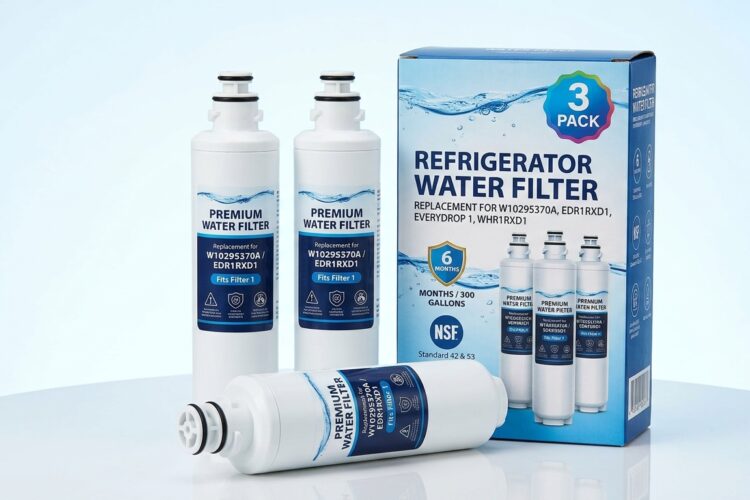
If you’ve ever tried to buy a refrigerator water filter, you know the feeling. You pull out the old cartridge, squint at the printed code, and then find yourself staring at a product page that lists five or six different part numbers, none of which match exactly. W10295370A, EDR1RXD1, WHR1RXD1, “Everydrop 1″… are they the same thing? Are they different? Does it matter?
This guide untangles that puzzle. It explains what these codes generally refer to, how this style of cartridge works, what a three-pack format means for planning, and which details deserve a closer look before you order. It is meant as general education rather than a review, and it makes no claims based on hands-on use of any specific product.
Introduction: A Cartridge With Many Names
Refrigerator filters have a naming problem. One physical design can circulate under several labels at the same time: the appliance maker’s brand name, an older part number, a newer cross-reference number, and a string of codes used by third-party manufacturers to signal that their version is designed to fit the same housing.
The codes in this title point to a long-running filter style used in many Whirlpool-built refrigerators, including numerous side-by-side models sold under related brands. “Everydrop” is the brand name Whirlpool uses for its own filters, and “Filter 1” is the designation attached to this particular size and connection style. The other codes, such as W10295370A, EDR1RXD1 and WHR1RXD1, are cross-reference numbers that identify the same fit category. When a third-party listing includes them, it is typically saying “this cartridge is intended as a replacement for that style,” not that it is the original branded product.
That distinction is worth keeping in mind as you read product pages. A replacement is designed to fit and perform comparably; it is not necessarily made by the same company, and its certifications, if any, belong to the replacement manufacturer.
What a Refrigerator Water Filter Actually Does
A refrigerator filter is a point-of-use device installed between the home’s cold water line and the dispenser and ice maker. Its purpose is modest and specific: improve the taste and smell of water and reduce particular substances, depending on the cartridge’s design and testing.
The Basics of Carbon Filtration
Most cartridges in this class rely on activated carbon, often shaped into a dense block. Carbon is full of microscopic pores that give it an enormous internal surface area. As water passes through, certain compounds cling to that surface, a process known as adsorption. This is why carbon has long been associated with reducing chlorine taste and odor.
Several things follow from that:
- Taste and smell are the areas where carbon is most commonly credited, particularly where tap water carries a noticeable disinfectant flavor.
- Fine particles can be caught by the block’s structure, though this varies by design.
- Capacity is finite. The carbon eventually saturates, which is why every manufacturer sets a replacement schedule.
Where Expectations Should Stay Realistic
A cartridge like this does not soften water, remove scale-forming minerals, or disinfect unsafe water. Its performance claims apply only to the substances named in its certification, if it has one. Households with well water, a boil-water notice, or specific contamination worries should treat a fridge filter as one piece of a larger plan, starting with the local water quality report or independent lab testing.
Decoding the Part Numbers
Because the part-number question is the most common source of confusion, it’s worth slowing down on it.
Everydrop Filter 1 is the brand-and-size name used on the manufacturer’s own packaging.
EDR1RXD1 is a code associated with that same filter family, often printed on the cartridge or the box.
W10295370A is a part number belonging to a related variant of the same fit style, commonly listed as interchangeable with the codes above in parts catalogs.
WHR1RXD1 is another cross-reference code used for the same category.
You’ll often see these grouped together on third-party listings. That grouping signals compatibility intent. It does not replace checking your own refrigerator’s documentation. Before ordering, find the filter number in your owner’s manual or on the label of your current cartridge, and compare it with the list.
Key Features of This Style of Replacement Filter
Designed Around a Specific Fit
The central attribute is the connection style. Cartridges in this family use a push-and-turn or quarter-turn mechanism, and they are shaped to slot into the filter housing used by a range of Whirlpool-platform refrigerators. When the fit is correct, the cartridge seats smoothly, locks into place, and requires no adapters.
Carbon-Based Media
The filtering material is generally activated carbon. Listings may describe it as carbon block, coconut-shell carbon or similar. These descriptions are helpful context but are not proof of performance on their own.
Certification Details
This is the area where listings differ most. Independent standards commonly referenced for refrigerator filters include:
- NSF/ANSI 42, covering aesthetic effects such as chlorine taste and odor, and particulates
- NSF/ANSI 53, covering certain health-related contaminants, with each certificate listing the specific substances
- NSF/ANSI 401, covering some incidental or emerging compounds
A certification belongs to a specific product from a specific manufacturer. If a listing mentions a standard, look for the certifying organization’s name and the data sheet. If it only says something general like “filters impurities,” you have little to evaluate.
The Three-Pack Format
The “3PACK” in the title means the purchase includes three cartridges. With the commonly suggested six-month replacement interval, that can cover roughly a year and a half of scheduled changes. A multipack can be a convenient way to avoid last-minute searching, though it also means holding spares, so storage matters. Cartridges should stay sealed in their packaging in a cool, dry place away from strong odors and direct sunlight.
Tool-Free Replacement
Swapping this style of cartridge generally takes a few minutes and no tools. The old filter is turned and pulled out, the new one is inserted and turned until it locks, and the system is flushed. Always follow the instructions that came with your refrigerator and the cartridge.
How It Can Be Used
Daily Drinking Water
The most common use is chilled water from the dispenser. Many people find that carbon-filtered water tastes cleaner, especially when the tap supply has a pronounced chlorine note.
Ice
Ice absorbs odors easily. If the water feeding the ice maker carries a smell, the cubes can carry it into your drinks. Filtered supply water helps, and so does emptying the ice bin occasionally, since freezers contribute their own odors.
Kitchen Tasks
Dispenser water is often used for:
- Brewing coffee or tea, where water character affects flavor
- Cooking rice, pasta or soups
- Filling kettles and pet bowls
- Preparing drink mixes
For infant formula, follow pediatric and formula-manufacturer guidance, which may call for specific water preparation.
Refilling Bottles
A dispenser can serve as a handy refill point for reusable bottles, supporting a habit of using fewer single-use plastics.
Habits That Help
- Flush after installing. Running a few gallons through the dispenser clears trapped air and loose carbon fines.
- Label the date. Mark the install date on the cartridge or set a reminder rather than relying only on the indicator light.
- Inspect for drips. A correctly seated cartridge should not leak.
- Reset the status light. Many refrigerators have a reset sequence, described in the owner’s manual.
Who It May Be Suitable For
- Owners of compatible Whirlpool-platform refrigerators whose current cartridge is due for replacement and who have confirmed the fit.
- Households that want to try a third-party option alongside or instead of the original brand and are comfortable checking certification details first.
- People who like to plan ahead, since a three-pack removes the need to reorder every cycle.
- Those who prefer filtered taste and want to keep using the refrigerator’s built-in dispenser.
- Renters and homeowners who want no plumbing changes, because the cartridge sits inside the appliance.
It may be less suitable for anyone whose refrigerator uses a different filter style, or for households with water issues that call for a more comprehensive treatment system.
Important Things to Consider Before Ordering
Confirm the Filter Type for Your Refrigerator
Check your manual, the model label inside the fresh-food compartment, or the number on your current cartridge. Appearance alone is not a reliable guide, since similar-looking refrigerators can use different cartridges.
Understand What “Replacement” and “Compatible” Mean
A listing that says it is a replacement for a branded part is describing intended fit. It does not mean the product is made by that brand. Read the seller and manufacturer information on the page.
Check for Verifiable Certification
Look for named standards and a certificate you can actually reference. Be cautious about wording that sounds technical but cannot be traced to a testing body.
Think About Warranty Terms
Some owners read their refrigerator’s warranty to see how it treats third-party parts. The documentation that came with your appliance is the right place to look.
Pay Attention to Fit Problems
If a cartridge resists seating, won’t lock, or leaks, stop and recheck compatibility rather than forcing it.
Consider Your Water Source
Refrigerator filters are intended for water that is already considered microbiologically safe. A local water quality report can help you understand what is in your supply.
Review Return Terms
Because fit is the main risk in this type of purchase, it helps to know the seller’s return conditions beforehand.
Plan for Disposal
Used cartridges usually go out with household waste, though some manufacturers offer recycling programs. Check their websites if that matters to you.
A General Comparison of Filtration Approaches
No single approach suits everyone. Here is a neutral overview.
Refrigerator cartridges are convenient and tied to the dispenser and ice maker. They are limited to compatible models and typically offer carbon-based treatment.
Pitcher filters need no installation and work anywhere, but they hold small volumes and take up shelf space.
Faucet-mounted filters treat water at the sink, though they may not fit every faucet and can affect flow.
Under-sink systems offer larger capacity and sometimes multiple stages, at the cost of installation effort and cabinet space.
Whole-house systems treat water at the point of entry, which helps every outlet but involves more complex setup.
Reverse osmosis systems can address a broader range of dissolved substances, but they require installation, use extra water and take up room.
Plenty of households combine methods, for instance using the fridge cartridge for everyday water and something else for specific needs.
Frequently Asked Questions
Are W10295370A, EDR1RXD1 and WHR1RXD1 the same filter?
They are cross-referenced codes for the same general fit category, and parts catalogs often list them together. Small variations can exist between versions, so confirm against your own refrigerator’s documentation.
What does “Everydrop 1” mean?
It is the brand name and size designation Whirlpool uses for this filter style. Third-party listings reference it to indicate which fit they target.
How often should I replace the cartridge?
A common recommendation is about every six months, or sooner if flow slows or the indicator light comes on. Heavy use or sediment-rich water can shorten the interval.
What happens if I wait too long?
A saturated cartridge may filter less effectively, and a clogged one can reduce flow. Staying on schedule avoids both.
Is cloudy water after installation normal?
Often, yes. Tiny air bubbles can make water look milky briefly, and carbon fines may appear at first. Flushing several gallons usually resolves it.
Do I need special tools or a plumber?
Generally no. This cartridge style is designed for hand installation. Follow the manual for your model.
Can I run the refrigerator without a filter?
Many models accept a bypass plug that allows unfiltered water to flow. Check your manual for details.
Is a third-party cartridge safe to use?
It depends on the individual product. Look for independent certification, confirmed fit and clear seller information. The original manufacturer’s guidance remains a useful reference.
How should I store the extra cartridges from a multipack?
Keep them sealed in their packaging, in a cool, dry spot, away from sunlight and strong smells.
Why is my dispenser slow after a change?
Trapped air, a cartridge that isn’t fully seated, or a kinked supply line are typical causes. Flushing and rechecking the installation often helps.
Does the filter improve ice?
If the ice maker draws from the filtered line, it can. Keeping the bin clean and covering open foods in the freezer also helps.
Conclusion
The long string of codes in this listing looks intimidating, but it boils down to one idea: this is a replacement cartridge aimed at a widely used Whirlpool filter fit, referenced by several interchangeable-looking numbers. Knowing what those numbers mean makes shopping less of a guessing game.
From there, the sensible steps are simple. Confirm your refrigerator’s filter type, look closely at certification information rather than general claims, store spare cartridges properly, and set a reminder so replacement doesn’t slip. Treat the cartridge as a taste-and-odor improvement within clear limits, and look to your local water report if you have broader concerns.