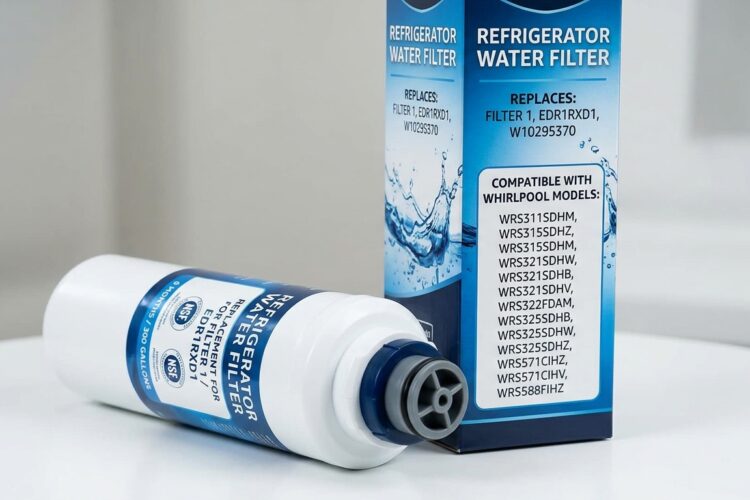
Most people don’t think about their refrigerator’s water filter until the little indicator light turns orange, the ice starts tasting a bit flat, or the dispenser slows to a trickle. At that point the question is usually the same: which filter fits this fridge, and does it matter which one I pick?
This guide covers replacement filters made for a family of Whirlpool side-by-side refrigerators, including the WRS311SDHM, WRS315SDHZ, WRS315SDHM, WRS321SDHW, WRS321SDHB, WRS321SDHV, WRS322FDAM, WRS325SDHB, WRS325SDHW, WRS325SDHZ, WRS571CIHZ, WRS571CIHV and WRS588FIHZ. It explains what these filters do, how the compatibility system works, how to think about the choice, and what to check before you order. It is educational and general. It is not a review, and it makes no claims about anyone’s personal experience with a specific unit.
Introduction: Why a Small Cartridge Gets So Much Attention
The water filter inside a refrigerator is easy to overlook. It sits in the base grille, in a back corner, or inside the fresh-food compartment, depending on the design. Yet every glass of water from the dispenser and every batch of ice passes through it.
Whirlpool’s side-by-side line, which includes the model numbers above, uses a filtration system that has been around for years. Many of these refrigerators accept the same style of cartridge, often referred to in the appliance world as “Filter 1.” The part numbers printed on various packages can look confusing because several brands, original and aftermarket, use different numbering schemes for what is physically the same fit. A single cartridge may be listed under half a dozen different codes.
This article walks through that terminology, explains what you can reasonably expect from a carbon-based refrigerator filter, and offers a checklist for choosing and replacing one. By the end, you should know what to look for in a product listing and how to confirm that a cartridge matches your model.
Understanding the Role of a Refrigerator Water Filter
A refrigerator filter is a small point-of-use filtration device. It sits between your home’s cold water supply line and the dispenser and ice maker. Its job is not to turn tap water into laboratory-grade water. It reduces certain things people commonly notice in drinking water, such as chlorine taste and odor, and, depending on the certification of the specific cartridge, a defined list of other contaminants.
How Carbon Block Filtration Generally Works
Most cartridges in this category use activated carbon, often in a compressed block. Activated carbon has a huge internal surface area, with countless tiny pores. As water flows through, certain compounds stick to the carbon surface. This process is called adsorption, and it is the reason carbon is so widely used for taste and odor improvement.
Some points worth knowing:
- Taste and odor: Chlorine is added by many municipal systems for disinfection. It does its job, but some people find the taste or smell noticeable, especially in cold drinks. Carbon filtration is commonly used to reduce it.
- Particulates: The structure of a carbon block can also trap small particles such as sediment, depending on its design.
- Limited capacity: Carbon doesn’t last forever. Once the adsorption sites fill up, the filter becomes less effective, which is why replacement schedules exist.
What Filters Typically Do Not Do
Being clear about limitations is part of being honest about any filtration product. A standard refrigerator cartridge generally:
- Does not soften water or remove the minerals that cause scale.
- Does not sterilize water or make microbiologically unsafe water safe to drink.
- Does not remove everything, since each cartridge is certified (or not) against specific, listed contaminants.
If your household has particular water quality concerns, such as a private well, a recent boil-water advisory, or known contamination, a refrigerator filter should not be your only line of defense. Local water reports and certified testing are the right starting points.
Key Features of This Type of Replacement Filter
Product listings for these filters tend to highlight a similar set of attributes. Here is what each one generally means, so you can interpret listings with a clear head.
Direct Fit for a Specific Whirlpool Platform
The main selling point is compatibility. These cartridges are designed to fit the filter housing used in the listed Whirlpool models, so you shouldn’t need adapters or modifications. The long list of model numbers in the title reflects that many refrigerators share the same filter housing even when their cabinet colors, handles or dispenser styles differ.
The suffix letters at the end of a model number often indicate color or minor variation. In this list, “SDHZ” typically points to a stainless-style finish, “SDHW” to white, “SDHB” to black, and “SDHV” to another finish option. The shared filter style across them is a big reason one cartridge can cover so many models.
Push-In or Twist-Style Installation
Cartridges for this family are built around a quarter-turn or push-and-turn design. The new filter goes into the housing, and a small rotation locks it into position. There is generally no need for tools. Many people find the replacement procedure takes only a few minutes, though you should always follow the instructions in your refrigerator’s manual.
Carbon-Based Filtration Media
As mentioned, the filtering material is typically activated carbon. Some manufacturers describe their specific formulation, such as coconut shell carbon or carbon block, and a few emphasize the quality of the carbon or its density. These descriptions are worth reading, but they are marketing language until supported by certification data.
Certification Information
This is the single most important detail to look for. Filters in this category are often tested against standards set by independent bodies. Commonly referenced ones include:
- NSF/ANSI 42, which concerns aesthetic effects such as chlorine taste and odor and particulates.
- NSF/ANSI 53, which concerns health-related contaminants, with specific substances listed on the certification.
- NSF/ANSI 401, which addresses certain emerging compounds.
Not every filter carries every certification, and a claim like “meets standards” in a listing is not the same as an independently verified certificate. If this matters to you, look for the certifying organization’s name and a performance data sheet, and check which contaminants the certification actually covers.
Recommended Replacement Interval
Manufacturers generally suggest replacing these cartridges about every six months or after a certain volume of water, whichever comes first. Many refrigerators include a reminder light tied to a timer or usage count. If your household uses a lot of water, or your tap water has a lot of sediment, the filter may need attention sooner.
Packaging Options
Some listings offer a single cartridge, others a multipack. Multipacks make sense if you want to keep spares on hand, but check the freshness guidance and storage instructions, since cartridges should be kept sealed and in a cool, dry place until needed.
How a Filter Like This Can Be Used (and Used Well)
A refrigerator filter is a quiet piece of equipment, but there are practical ways to get the most out of it.
Everyday Drinking Water
The most obvious use is cold drinking water from the dispenser. People who dislike the taste of chlorinated tap water often find that carbon-filtered water is more pleasant to drink, particularly when it’s chilled. It can make a modest difference if you tend to reach for bottled water mainly because of taste.
Ice for Drinks
Ice cubes pick up flavors easily. If the ice maker’s water has a noticeable odor, that odor can carry into the ice and then into a glass of lemonade or iced tea. Filtered water feeding the ice maker tends to give cleaner-tasting ice. It also helps to empty and refresh the ice bin from time to time, since ice absorbs freezer odors regardless of the water quality.
Cooking and Beverage Preparation
Many households fill pots and kettles from the dispenser. Filtered water can be a reasonable choice for:
- Brewing tea or coffee, where water quality influences flavor
- Cooking rice or pasta
- Mixing baby formula, though for infant feeding you should follow pediatric and manufacturer guidance, which may call for specific water treatment steps
- Filling pet water bowls
Filling Reusable Bottles
If you’re trying to cut down on single-use plastic bottles, a refrigerator dispenser can serve as a convenient refill station. It does not replace a thorough understanding of your local water quality, but for many people it’s a practical routine.
Maintenance Habits That Support Performance
A few small habits help the system work as intended:
- Flush the new filter. After installation, most instructions recommend running a few gallons of water through the dispenser to purge air and loose carbon particles. Cloudy or sputtering water during this period is common and typically clears.
- Note the date. Write the install date on the cartridge, or set a phone reminder, rather than relying solely on the indicator light.
- Check for leaks. After installing, inspect the area for drips. A properly seated cartridge should not leak.
- Reset the indicator. Many models have a reset button or sequence for the filter status light. Your owner’s manual explains the process for your specific model.
Who This Type of Filter May Be Suitable For
Different households have different needs. Here are some situations where a replacement cartridge of this kind may make sense.
Owners of the Listed Whirlpool Models
If you own one of the refrigerators named above and the current cartridge is nearing the end of its life, a compatible replacement is the straightforward path. The key word is compatible, so confirm that the product’s compatibility list includes your exact model.
Households That Prefer Filtered Water for Taste
People who notice a chlorine smell or aftertaste in their tap water may appreciate carbon filtration. Taste is subjective, and results depend on your local water source.
People Who Want a Convenient Refill Routine
If you refill bottles and glasses often, having a filtered, chilled source right in the kitchen can be handy, especially compared with maintaining a separate pitcher filter.
Renters and Homeowners Who Want to Avoid Plumbing Changes
A cartridge that fits inside the refrigerator requires no plumbing work. For people who can’t or don’t want to alter their home’s water system, this is a simple option.
Those Comparing Original and Aftermarket Options
Some shoppers specifically want to compare original-brand cartridges with third-party alternatives. That is a legitimate consideration, and the section below on things to consider outlines what to look at.
Important Things to Consider Before Choosing
A little research before ordering can save frustration later. These are the factors worth weighing.
1. Confirm Your Exact Model Number
Model numbers are usually printed on a label inside the fresh-food compartment, often on the upper left wall or near the crisper drawers. Compare it with the compatibility list on the product page. Even though the listed models share a filter style, similar-looking refrigerators from the same brand can use different cartridges. Never assume based on appearance alone.
2. Check the Filter Location and Style
Look at where your current filter sits and how it attaches. A cartridge for a base-grille housing differs from one that mounts inside the fresh-food compartment or in the water line. Matching the physical form matters as much as matching the part number.
3. Understand Original vs. Aftermarket
Both kinds exist in this category. Points to think about:
- Original-brand cartridges are made or authorized by the refrigerator manufacturer and are usually backed by that company’s certification claims.
- Aftermarket cartridges are made by other companies to fit the same housing. Quality and certification vary. Some carry independent certification and some do not.
- Warranty considerations: Some people check their refrigerator’s warranty terms regarding third-party parts. Reading the warranty documentation can clarify any concerns.
Neither category is automatically better or worse. The useful question is whether a specific cartridge has verifiable certification and a good fit.
4. Look for Certification, Not Just Claims
Phrases like “removes contaminants” are vague. Look for named standards, the certifying body, and, if available, the list of contaminants tested and the reduction percentages. If a listing offers none of this, you have less information to work with.
5. Beware of Poor-Fit Problems
An ill-fitting cartridge can cause leaks, reduced flow, or error lights. If the cartridge seems to resist seating or does not lock smoothly, stop and recheck compatibility rather than forcing it.
6. Consider Your Water Source
City water, well water and water from older plumbing present different challenges. A refrigerator filter is designed for water that is already considered microbiologically safe. If you have specific concerns, consider consulting your water utility’s annual quality report or a certified testing lab.
7. Plan the Replacement Schedule
Think about how often you’ll actually remember to change it. Some households prefer to align replacement with a recurring calendar date, such as the start of spring and autumn, so it doesn’t slip.
8. Read the Return and Fit Policies
Since fit is the primary risk with this kind of purchase, it helps to review the seller’s return terms in case the cartridge turns out not to match.
9. Disposal and Environmental Thoughts
Used cartridges are generally disposed of as household waste, although some manufacturers run take-back or recycling programs. If this is important to you, check the manufacturer’s website for current options.
A General Comparison of Filtration Categories
Refrigerator cartridges are only one way to filter drinking water. Here’s a neutral overview of how common categories differ, so you can decide what suits your household. None of these is universally “better,” since the right choice depends on your needs and water.
Refrigerator-Integrated Cartridges
- Strengths: Built into the appliance, convenient, fed directly to the dispenser and ice maker, no counter space needed.
- Limitations: Only available for compatible models, and treatment scope is usually limited to carbon-based filtration.
- Best for: People who want a low-effort option tied to the fridge they already own.
Pitcher Filters
- Strengths: Portable, require no installation, and work in any kitchen.
- Limitations: Small capacity, slower filling, and they take up fridge shelf space.
- Best for: Renters, small households, or those without a compatible fridge.
Faucet-Mounted Filters
- Strengths: Filter water at the tap for cooking and drinking, with no appliance dependence.
- Limitations: May not fit every faucet, and can reduce flow rate.
- Best for: People who want filtered water on demand for the sink.
Under-Sink Systems
- Strengths: Higher capacity, often with multiple filtration stages, and a dedicated faucet in some setups.
- Limitations: Require installation and under-cabinet space, and tend to involve more setup.
- Best for: Households wanting broader treatment and willing to handle installation.
Whole-House Systems
- Strengths: Treat water at the point of entry, which benefits every tap, shower and appliance.
- Limitations: More complex and more involved to install and maintain.
- Best for: Homeowners with household-wide concerns such as sediment or chlorine.
Reverse Osmosis Systems
- Strengths: Capable of reducing a wide range of dissolved substances, depending on design.
- Limitations: Need installation, produce wastewater, and take up space.
- Best for: People with specific water quality concerns who want a more comprehensive approach.
Many households mix categories. For example, someone might use the fridge cartridge for everyday drinking and a separate system for specific needs.
Frequently Asked Questions
How do I know which cartridge my refrigerator uses?
Start with the model number on your refrigerator’s label and check it against the product’s compatibility list. Your owner’s manual or the manufacturer’s website can also identify the correct filter type. You can also look at the part number printed on your existing cartridge, though numbering differs between brands.
Can one cartridge really fit so many different models?
Yes. Appliance makers often reuse the same filter housing across a range of cabinets, colors and features. The long model lists you see in listings reflect that shared platform.
How often should the filter be replaced?
Manufacturers commonly recommend replacement about every six months, or sooner if the water flow drops noticeably or the indicator light comes on. Households with heavy water usage or high sediment may need to replace more often.
What if I don’t replace it on schedule?
A cartridge that has reached its capacity may filter less effectively, and a clogged one can slow water flow. Neglected filters are not a safe place to store water, so it’s wise to stay on schedule.
Is it normal for the water to look cloudy after installation?
Often, yes. Tiny air bubbles can make water look milky for a short time, and loose carbon fines may appear at first. Running several gallons through the dispenser usually clears this. If the water doesn’t clear, check that the cartridge is seated properly.
Do I need a plumber?
For cartridges that fit inside the refrigerator housing, installation is typically a hands-on task that needs no plumbing skills. Always follow your manual’s instructions.
Will a filter remove everything from my water?
No. Filters reduce specific substances according to their design and certification. They are not a universal cure-all. If you have particular concerns, consult your local water quality report or a testing service.
Can I run the refrigerator without a filter?
Many models allow a bypass plug in place of a cartridge, which lets water flow unfiltered. Check your manual for details. Water will still be dispensed, but it will not be filtered.
Is an aftermarket cartridge safe to use?
That depends on the specific product and its certifications. The practical approach is to look for independent certification information, check that the fit is confirmed, and read the seller’s policies. If you’re uncertain, the original manufacturer’s guidance is a good reference point.
How should I store a spare cartridge?
Keep it sealed in its original packaging, in a cool, dry location away from direct sunlight and strong odors.
Why is my dispenser slow after changing the filter?
Air in the line, a cartridge that isn’t fully seated, or a kinked supply hose are common causes. Flushing the system and rechecking the installation often resolves it. If the problem persists, the manufacturer’s support pages can help.
Does the filter affect ice quality?
If your ice maker is connected to the filtered line, the ice should reflect that. Ice can also pick up freezer odors, so keeping the bin clean and the freezer free of strongly scented open food helps.
Conclusion
A replacement filter for a Whirlpool side-by-side refrigerator is a small, practical item, but it touches something you use every day. Understanding what it does, and what it does not do, helps you set realistic expectations. A carbon-based cartridge can improve the taste and odor of water and trap certain particles, but it works within limits and needs to be replaced on a regular schedule.
If you own one of the models discussed here, such as the WRS311SDHM, WRS321SDHW, WRS325SDHZ, WRS571CIHZ or WRS588FIHZ, the most important step is confirming compatibility before you order. After that, look closely at certification details, think about whether an original or aftermarket cartridge suits you, and set a reminder so the next replacement doesn’t catch you off guard.
Good water habits are mostly about small, repeatable routines: replace on time, flush the new cartridge, keep the ice bin clean, and stay informed about your local water quality. A well-chosen filter fits easily into that routine.